
Make HOCl On Demand.
On-site generation is one of three ways to source the hypochlorous that GEIA equipment disperses — alongside EPA-registered tablets and ready-to-use HOCl. Generators make hypochlorous from salt, water, and electricity, on site, as you need it. For facilities running a lot of solution, it delivers the lowest per-gallon cost.
Salt, water, electricity — hypochlorous on demand.
An on-site HOCl generator produces hypochlorous electrochemically. You feed it salt and water; it runs an electric current through the brine and produces hypochlorous solution on the spot. No shipping liquid chemistry, no waiting on deliveries — you make what you need, when you need it, in the volume your facility consumes.
Three cheap inputs
Feature: Salt, water, and electricity are the only ongoing inputs. The generator does the rest.
Result: Your per-gallon chemistry cost drops dramatically once volume is high — the inputs are commodities.
Made on the spot
Feature: Hypochlorous is produced on site, as you need it, rather than shipped in as finished liquid.
Result: No freight on heavy liquid, no stockpiling, no waiting on a delivery to keep a program running.
Built for volume
Feature: Generators carry a higher up-front investment but the lowest per-gallon cost at scale.
Result: Large operations running ongoing programs pay off the equipment in chemistry savings over time.
Generated HOCl runs in the same units as everything else.
GEIA equipment is source-agnostic. Whatever produces your hypochlorous, AYRUS, LUVIAN, and ROGE disperse it the same way — as a 1–3 micron dry mist that fills the full volume of a space. The target working concentration is 294 ppm; the equipment maximum is 300 ppm, whether the solution came from a tablet or a generator.
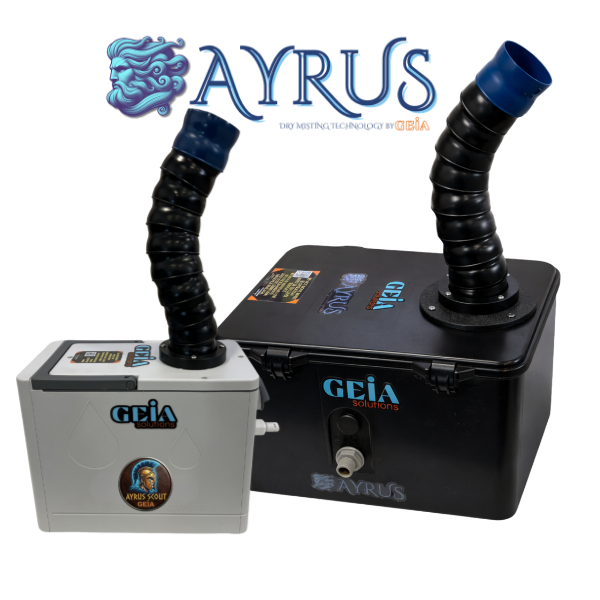
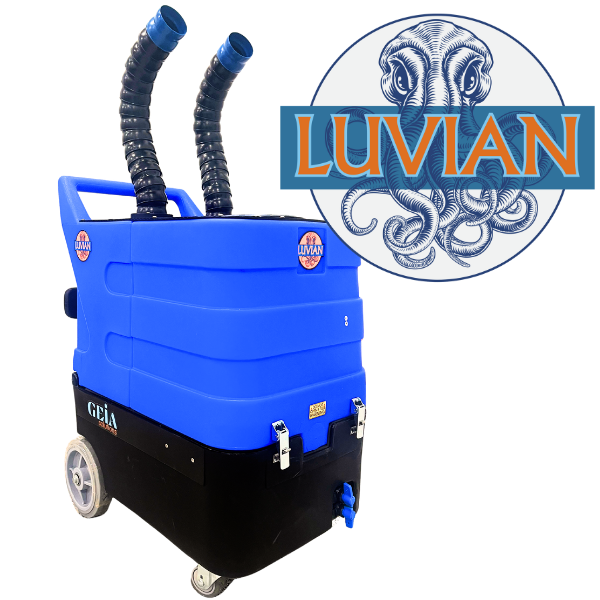
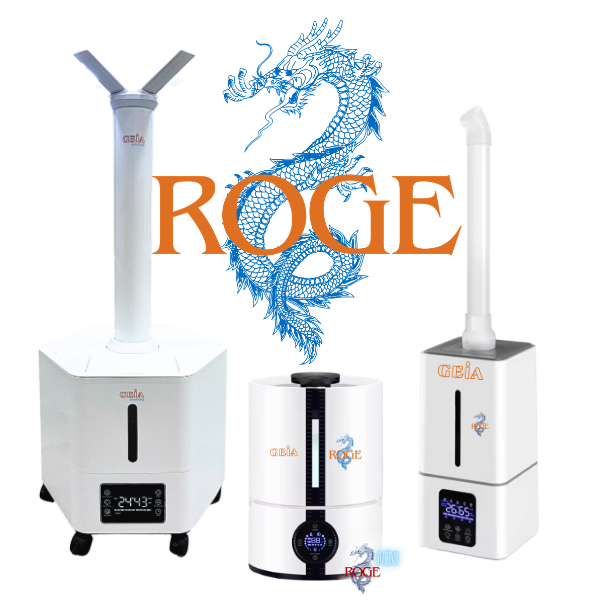
Keep generated solution within the equipment ceiling. GEIA units operate up to 300 ppm; the target working concentration is 294 ppm. Your distributor will help you dial the generator output to the right working concentration for your equipment.
Tablets vs. generation. Both make hypochlorous. Pick by volume.
Most facilities should start with EPA-registered tablets — they're simple, shelf-stable, and registered for use out of the box. On-site generation earns its place when you're consuming enough solution that per-gallon cost outweighs the higher up-front investment. Here's the straight version.
| Consideration | EPA-Registered Tablets | On-Site Generation |
|---|---|---|
| Best for | Most facilities | High-volume operations |
| Up-front cost | Low — no capital equipment | Higher — you buy a generator |
| Per-gallon cost at scale | Higher per gallon | Lowest per gallon at volume |
| EPA registration | Yes — registered chemistry (3.3g Tablets, 6.5g Tablets) | Varies — confirm with your generator and local requirements |
| Shelf-stability / storage | Shelf-stable, pre-measured, easy to keep on hand | Made on demand — minimal liquid storage |
| Setup & footprint | None — open a bucket, mix, load | Generator install, salt supply, water and power |
| Logistics | Order and stock tablets | No liquid freight — make it on site |
| Where it shines | Single rooms, schools, clinics, hotels, most programs | Large ag, large facilities, ongoing high-throughput programs |
There's no wrong door here. The same GEIA equipment disperses either one. The question is purely how much solution you move and whether the up-front generator investment pays back in per-gallon savings.
Generation is a volume decision.
The math tips toward on-site generation when a facility runs a lot of solution, day in and day out. The patterns we see most:
Large agriculture
Barns, poultry houses, livestock operations, large produce facilities — spaces big enough that solution consumption is constant. Generated HOCl keeps per-gallon cost down across an ongoing program.
Large facilities
Big multi-room sites running LUVIAN sweeps or banks of set-in-place ROGE units. Once you're filling tanks all day, making solution on site beats stocking it.
Ongoing high-throughput programs
Any operation treating space on a continuous schedule at scale. The higher up-front investment pays back through the lowest per-gallon cost over time.
Not sure which side of the line you're on? Most facilities are well served by tablets. If you think your volume justifies a generator, your distributor can run the per-gallon math with you.
However you source it, hypochlorous goes on top of cleaning.
Tablet or generator, the role of HOCl is the same: an added layer on top of standard cleaning, never a replacement for it. Clean first, wipe high-touch surfaces, then dry mist. The source of your hypochlorous doesn't change that sequence.
FAQ — On-Site HOCl Generation
Neither is "better" in the abstract — they're suited to different volumes. Tablets are simple, shelf-stable, EPA-registered, and the right choice for most facilities. On-site generation has a higher up-front cost but the lowest per-gallon cost at scale, which makes it the right answer for large ag and large facilities running a lot of solution. Pick by how much hypochlorous you move.
Yes. AYRUS, LUVIAN, and ROGE are all source-agnostic — they disperse hypochlorous from tablets, ready-to-use solution, or a generator the same way. Keep the working concentration within the equipment ceiling: the target is 294 ppm and the equipment maximum is 300 ppm.
Salt, water, and electricity. The generator runs an electric current through salt brine to produce hypochlorous on site. Those three commodity inputs are why the per-gallon cost is so low once volume is high — there's no liquid chemistry to ship and stock.
It varies. EPA registration sits with the chemistry, and for generated hypochlorous the registration status depends on the specific generator and your jurisdiction. Confirm registration and use directions with your generator manufacturer and your local requirements before relying on generated HOCl for a specific disinfection use. EPA-registered tablets like 3.3g and 6.5g Tablets carry their registration out of the box.
When the per-gallon savings outrun the up-front equipment cost — which happens at high, ongoing volume. Large agricultural operations and large multi-room facilities running continuous programs are the usual candidates. Your distributor can run the per-gallon math against your actual consumption.
Yes. Hypochlorous is an added layer on top of standard cleaning, never a replacement for it — regardless of how you source it. Clean first, wipe high-touch surfaces, then dry mist.
Run the per-gallon math with us.
Tell us your facility size and how much solution you move. We'll help you decide between tablets and on-site generation — and spec the GEIA equipment that fits either one.
Get a Quote