
You're a Meat Processor, Not a Chemical Engineer. Treat the Air and the Overhead a Hose Will Never Reach.
HOCl dry misting fits inside your between-shift window — reaching hanging carcasses, conveyors, drains, and the overhead structure above the harvest floor that wet sanitation can hit but never really treat. It works alongside your HACCP-validated SSOP, never in place of it. No rinse-down. No standing water. No NR surprise on the next FSIS walkthrough.
GEIA Dry Misting in Meat Processing
Watch dry misting treat processing rooms and back-of-house as an added environmental layer.
Liquid Sprays Only Reach What You Point Them At. The Air and the Overhead Were Never in the Plan.
Your crew's wash-down is solid: scrape, foam, rinse, sanitize, verify. It works on the surfaces a hose can reach. It does not work on the spaces a hose can't — the underside of overhead conveyors, the inside of equipment housings, the rail and structure above hanging carcasses, the air drawn back into a grinding room when the next shift starts. Environmental Monitoring Program swabs come back, and a positive in a harborage niche means a wider zone of corrective action than anyone wants.
Meanwhile, the interventions you already run carry trade-offs: the pungent smell of peracetic acid, the corrosion of bleach on stainless and seals, the constant worry of an NR during the next USDA inspection. And there's no clean way to add another environmental layer — not if it means another rinse cycle the line schedule won't tolerate.
- An environmental treatment that fits between wash-down and start-up — no extra rinse cycle
- Coverage that reaches hanging product, conveyor undersides, drains, and the overhead structure a hose can't
- A near-neutral chemistry that won't corrode stainless, aluminum, gaskets, and seals
- A workflow the sanitation crew can run and the FSIS inspector can see documented — without rewriting the HACCP plan
Dry Misting Behaves Like a Gas. It Goes Where a Hose Cannot.
GEIA equipment disperses hypochlorous as a 1–3 micron dry mist that stays airborne and distributes through the full volume of a room — air, overhead rail and structure, conveyor undersides, drains, and the floor-to-wall junctions where harborage hides. Hypochlorous is the same molecule the human immune system makes. It carries a near-neutral pH, leaves no residue, and breaks down to saline. Because the droplets are so fine they evaporate before wetting product — adding a small amount of humidity to cold-room air rather than standing water to your sanitation window.
Air & Overhead in One Cycle
A single cycle treats the air above the harvest floor and the equipment and structure your crew couldn't reach with a hose — supporting reduction of the bioburden that drives EMP findings between wet sanitation shifts.
No Rinse. No Corrosion.
The dry mist evaporates with no residue and no corrective rinse. Near-neutral pH chemistry is non-corrosive to stainless, aluminum, gaskets, and seals at recommended concentrations.
Built for Cold Rooms
Sub-cooler temperatures don't stop the mist. Controlled misting adds humidity to cold-room air, which processors associate with reduced cooler shrink on hanging carcasses and stored primals.
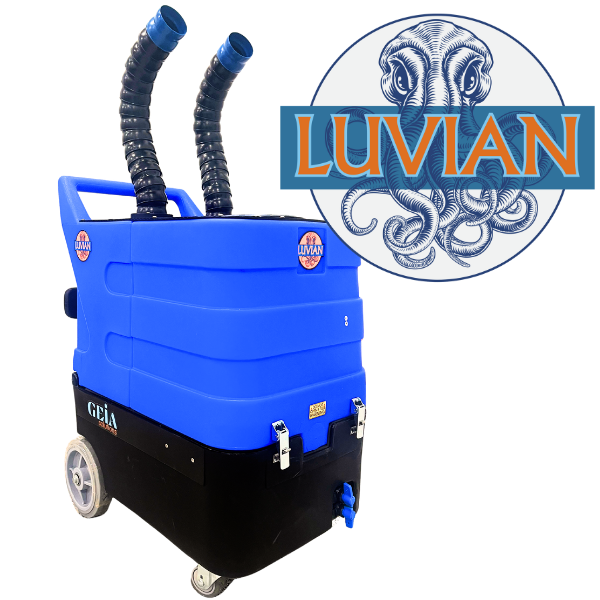
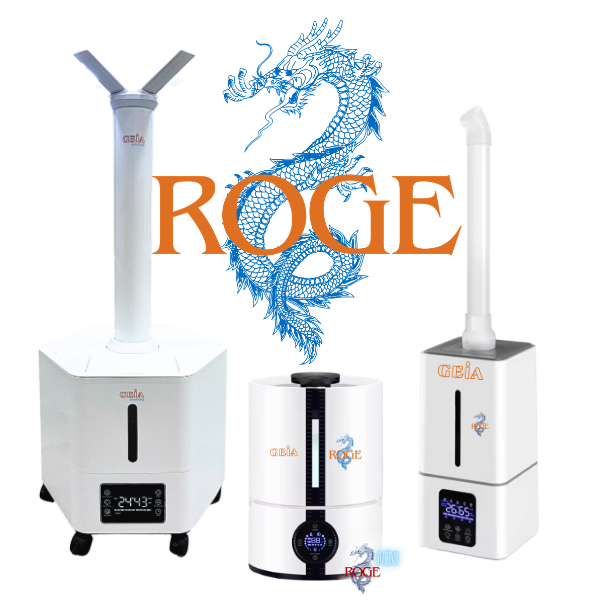
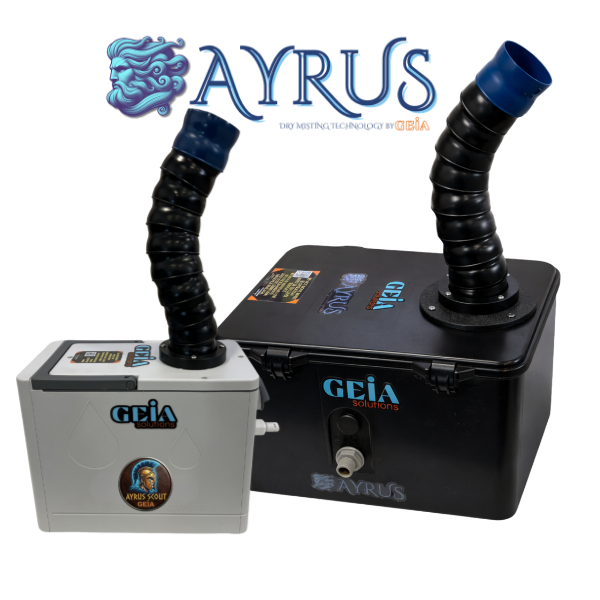
Sized for Harvest Floors, Coolers, and Trailers
What Changes When the Whole Room Is Treated
"We were tired of the peracetic smell and watching bleach eat our seals. GEIA drops into the gap between sanitation and start-up — the LUVIAN sweeps the harvest floor while the crew documents. No rinse, no corrosion, and the cooler air actually feels different."
— Plant Operations Manager, meat processing facility (name on file)
How GEIA Fits Inside Your Between-Shift Window
Sanitation Crew Runs SSOP
Scrape, foam, rinse, sanitize, verify — your existing HACCP-validated wash-down runs first, unchanged. Dirt and organic matter come off; HOCl is an added layer, never a replacement for cleaning.
Run GEIA
Mobile LUVIAN sweeps large harvest floors and cold storage. Set-in-place ROGE runs intermittent fog cycles in coolers and grinding rooms. Portable AYRUS handles trailers and corner spaces — covering the air and overhead a hose can't.
Production Restarts
The dry mist evaporates with no residue. No standing water, no corrective rinse. The line restarts on schedule with the whole room treated — not just the wetted surfaces.
Document & Maintain
Cycle logs attach to your sanitation records and EMP documentation. Tablets refilled on schedule. Descaler every 6 months. Ongoing labor: minutes per unit per month.
Frequently Asked Questions
No. GEIA works alongside your existing sanitation plan — never in place of it. Your wash-down runs first to remove dirt and organic matter. GEIA then treats the air and the overhead and equipment surfaces your crew couldn't reach with a hose. The two together cover both wetted surfaces and the full environment.
GEIA equipment is an application method and makes no kill claims. Listeria monocytogenes, Salmonella, and Shiga toxin-producing E. coli are named here only as the risk context that drives recalls and EMP findings — not as a GEIA efficacy claim. Hypochlorous chemistry helps reduce environmental bioburden as an added layer; any disinfectant efficacy claim belongs to the EPA-registered chemistry, not the equipment. Confirm pathogen claims and use concentrations with your chemistry's registration and applicable Food Contact Notifications.
The mist is ultra-fine — 1–3 micron particles that evaporate without leaving standing water, so there is no corrective rinse. Near-neutral pH hypochlorous is non-corrosive to stainless, aluminum, gaskets, and seals at recommended concentrations, unlike bleach. No fumes, no PPE beyond normal operating conditions.
HOCl use in federally inspected meat and poultry facilities is governed by USDA-FSIS Directive 7120.1, the relevant FDA food-contact provisions, and the Food Contact Notifications filed by your HOCl source. Keep that documentation on file and confirm intended use with your in-plant FSIS inspector before adding any antimicrobial intervention to your HACCP plan. GEIA cycle logs attach as supporting environmental treatment records.
Because the droplets are sub-micron-fine, controlled misting adds a small amount of humidity to cold-room air rather than wetting product. Processors associate this with reduced cooler shrink — the moisture loss that typically runs 1–3% of carcass weight in standard refrigeration. The set-in-place ROGE is well suited to intermittent cooler cycles; the mobile LUVIAN handles larger storage rooms.
GEIA equipment disperses hypochlorous solutions and is itself not EPA-registered as a disinfectant. EPA registration sits with the chemistry. 3.3g and 6.5g Tablets are EPA-registered HOCl-producing tablets. GEIA equipment is also compatible with other EPA-registered HOCl tablets, ready-to-use HOCl, and HOCl generators many distributors supply. Your distributor will confirm the chemistry your facility uses meets your jurisdiction's food-safety requirements.
Ready to Treat the Air and the Overhead a Hose Will Never Reach?
Get a custom quote for your plant, or schedule a live demo — we'll mist a cooler or harvest floor while your QA and sanitation leads watch.