The Biggest Health Risk in Your Operatory Is the One You Can't See.
Aerosol-generating procedures put fine droplets into the air of every treatment room — droplets your wipe-down between patients was never designed to reach. HOCl dry misting adds an airborne layer after your standard surface cleaning, treating the air, the equipment, and the hard-to-reach spaces around the chair. It works alongside your infection-control protocol, never in place of it.
GEIA Dry Misting in Dental Offices
See operatories treated between patients — the whole room, not just wiped surfaces.
You Disinfect Every Surface Between Patients. The Air Was Never in the Checklist.
Your turnover protocol is thorough: barriers off, surfaces sprayed, instruments processed, chair wiped down. It works on the surfaces your team can reach with a cloth. It does not address what's already airborne — the fine aerosols that drilling, ultrasonic scaling, and air-water syringes put into the room and that linger long after the patient leaves the chair.
Meanwhile, the spaces between treatment rooms keep moving fast. Operatories turn over on tight schedules. The waiting room fills and empties all day with people who arrive feeling unwell. And there's no easy way to treat the air a patient is about to breathe without slowing the schedule or clearing the room — which a busy practice can't afford.
- An airborne layer that addresses aerosols surface wiping can't reach
- Treatment that fits between patients — measured in minutes, not full room closures
- Chemistry that's safe around patients, staff, and sensitive operatory equipment
- A workflow the existing team can run, that fits the infection-control protocol without rewriting it
Dry Misting Treats the Air You Can't Wipe.
GEIA equipment disperses hypochlorous as a 1–3 micron dry mist that fills the full volume of a treatment room — the air, the surfaces, and the hard-to-reach areas around dental equipment and chairs. Hypochlorous is the same molecule the human immune system produces. It is non-toxic, pH neutral, and leaves no residue or harsh fumes. Because the mist is ultra-fine and gentle, rooms can be treated quickly between patients without wiping down afterward.
Address Airborne Aerosols
A single cycle treats the air your procedures put into the room — the aerosols that linger after the patient leaves and that surface wiping never reaches.
Reach Around the Chair
Mist settles into the hard-to-reach spaces around equipment, chairs, and fixtures — the gaps a cloth skips on a fast turnover.
Safe in Occupied Spaces
Non-toxic, pH neutral, residue-free. Safe for patients, staff, and sensitive operatory equipment — runs unattended with minimal setup.
Built for Operatory Turnover and Waiting-Room Air
What Changes When the Air Is Treated, Not Just the Surfaces
"We run our normal turnover, then the unit treats the room while the team is documenting. It reaches the air and the spaces around the chair we could never get to with a wipe — and there's nothing to clean up afterward. Patients notice how fresh the rooms feel."
— Office Manager, multi-operatory dental practice (name on file)
How GEIA Fits Between Patients
Run Standard Turnover
Barriers off, surfaces sprayed, instruments processed, chair wiped — your existing infection-control protocol runs first, unchanged.
Run GEIA
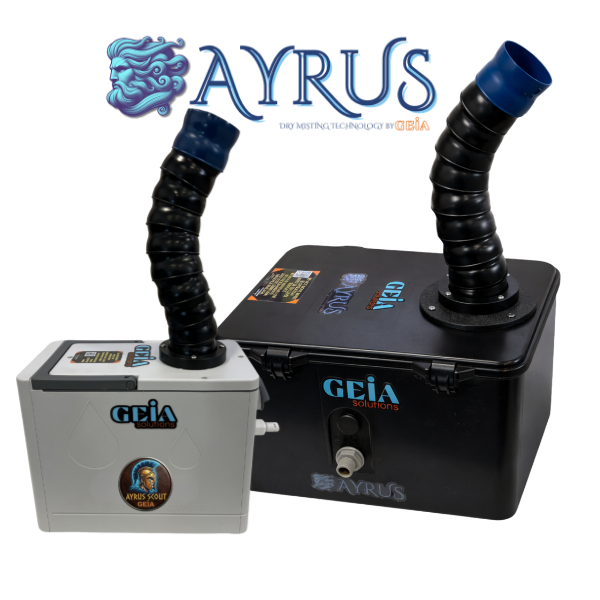
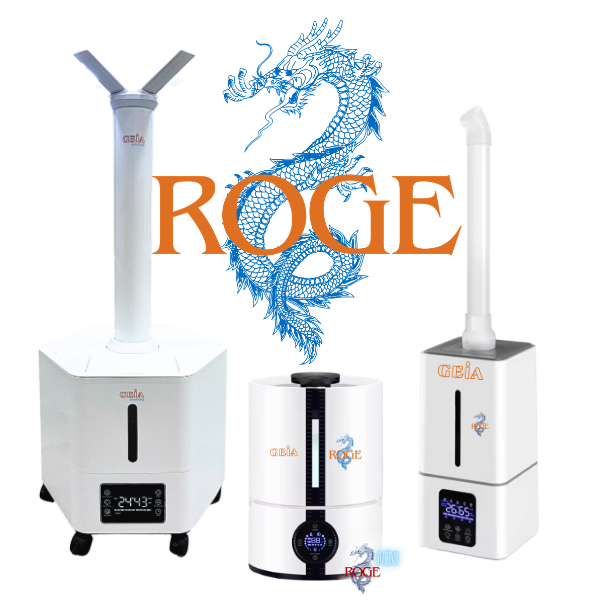
Carry the portable AYRUS into the operatory, or let a set-in-place ROGE run intermittent fog cycles in the waiting room — treating the air and the spaces a cloth can't reach.
Seat the Next Patient
Dry mist evaporates with no residue and no wipe-down. The room is ready on schedule — air, surfaces, and odors addressed, not just the wetted surfaces.
Maintain
Tablets refilled on schedule. Descaler every 6 months. Ongoing labor: minutes per unit per month.
Frequently Asked Questions
No. GEIA works alongside your existing surface cleaning and infection-control protocol — never in place of it. Your turnover runs first. GEIA then treats the air and the hard-to-reach spaces a wipe-down can't address. The two together treat both wiped surfaces and the full environment.
Hypochlorous is the same molecule the human immune system produces — non-toxic, pH neutral, non-corrosive, and residue-free. It is safe in occupied spaces and gentle on sensitive operatory equipment. Rooms can be treated quickly and safely between patients.
No. The mist is ultra-fine — 1–3 micron droplets that disperse evenly and evaporate without leaving standing water or residue. There is no wipe-down step. Cycles fit inside your existing turnover window without adding labor.
Aerosol-generating procedures put fine droplets into the air of the operatory that linger after the patient leaves and that surface wiping never reaches. GEIA dry misting adds an airborne layer that helps reduce and manage those airborne and surface contaminants as part of your between-patient turnover. It complements your existing protocol; it does not replace it.
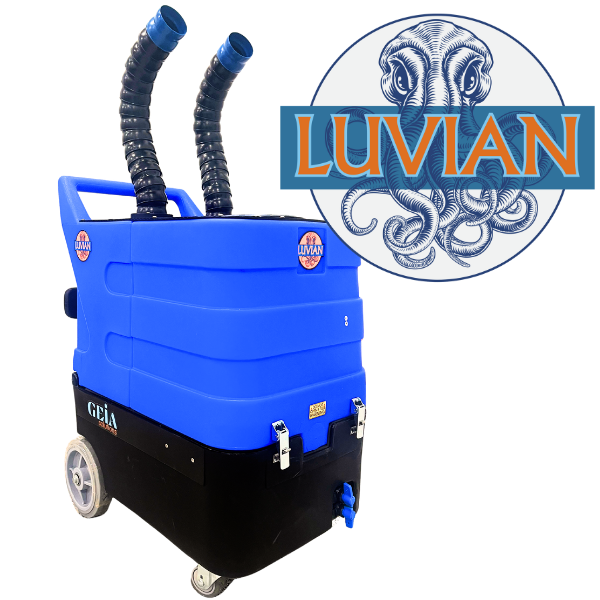
The portable AYRUS is carried operatory to operatory — ideal for a single chair or a few rooms. A set-in-place ROGE runs intermittent fog cycles in a fixed room like the waiting area. Larger multi-operatory clinics and surgical centers can add the mobile LUVIAN, which rolls through the facility with higher output. See the AYRUS, ROGE, and LUVIAN product pages.
GEIA equipment disperses hypochlorous solutions. EPA registration sits with the chemistry, not the equipment. 3.3g and 6.5g Tablets are EPA-registered HOCl-producing tablets. GEIA equipment is also compatible with other EPA-registered HOCl tablets, ready-to-use HOCl, and HOCl generators many distributors supply. Your distributor will confirm the chemistry your practice uses meets your jurisdiction's requirements.
Ready to Treat the Air Between Every Patient?
Get a custom quote for your practice, or schedule a live demo — we'll mist an operatory while your team watches, and you can stay in the room.