Treat the Air in Every Exam Room, Kennel, and Isolation Ward — Without Moving a Single Animal.
Parvo survives for months on surfaces. Bordetella spreads through the air your patients share. HOCl dry misting reaches the corners, cages, and air your team can spray but never fully treat — and it does it gently enough to run while staff and animals stay in the room. It works alongside your clinic's cleaning protocol, never in place of it.
GEIA Dry Misting in Veterinary Clinics
See exam rooms, kennels, and isolation wards treated between patients.
You Can Disinfect Every Surface You Can Reach. The Pathogen Doesn't Stay on the Surfaces You Can Reach.
Your protocol is disciplined: clean the exam table, wipe the kennel, mop the ward, rotate isolation. It works on the hard, non-porous surfaces a cloth can touch. But canine parvovirus is one of the most durable pathogens a clinic faces — it can persist for months on contaminated surfaces, equipment, and kennel areas, including the gaps, cage seams, drains, and porous corners a wipe never reaches. And the airborne agents behind kennel cough don't wait on surfaces at all; they move through the air between a coughing patient and the next animal in the room.
Manual spraying and wiping is also labor-intensive and inconsistent — coverage varies between staff and gets thinnest exactly when the clinic is busiest. The result is an environment that looks clean and still carries a transmission risk in the air and the places no hand reaches.
- Whole-room coverage that reaches cage seams, corners, and the air — not just wiped surfaces
- A treatment that can run in occupied spaces, so animals don't have to be moved
- Chemistry gentle enough for daily use around stressed, sick, and recovering patients
- Less reliance on manual spraying, so coverage stays consistent on the busiest days
Dry Misting Reaches the Air and the Corners a Cloth Can't.
GEIA equipment disperses hypochlorous as a 1–3 micron dry mist that stays suspended long enough to fill exam rooms, kennels, isolation wards, and common areas, then settles evenly onto surfaces, cage seams, and corners. Hypochlorous is the same molecule the immune systems of humans and animals produce to fight infection. It is non-toxic, pH neutral, and non-corrosive, and it breaks down to a simple saline. It's a wet application, but the mist is ultra-fine — no soaking, no sticky residue, no excessive moisture on equipment or flooring — so rooms return to service quickly.
Treat Without Moving Animals
Because hypochlorous is so gentle, treatments can often run while staff and patients stay in the room. No clearing out a busy ward, no relocating recovering animals.
Air and Surfaces Together
One cycle helps address the airborne particles behind respiratory spread and the surface contamination on cages, corners, and equipment that manual wiping misses.
Odor, Handled
The same cycle helps reduce odor-causing compounds throughout the clinic — kennels, isolation, and waiting areas — leaving spaces that smell cared-for, not chemical.
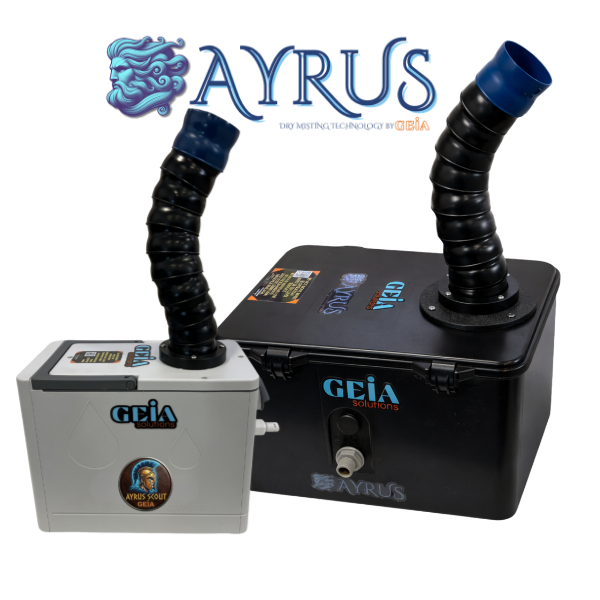
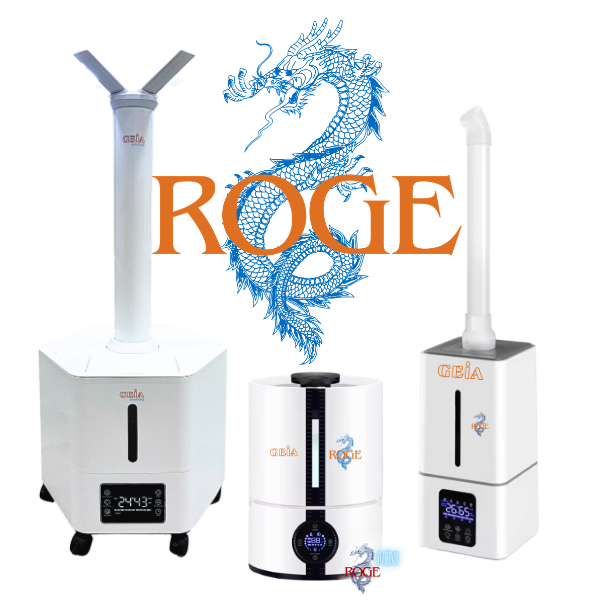
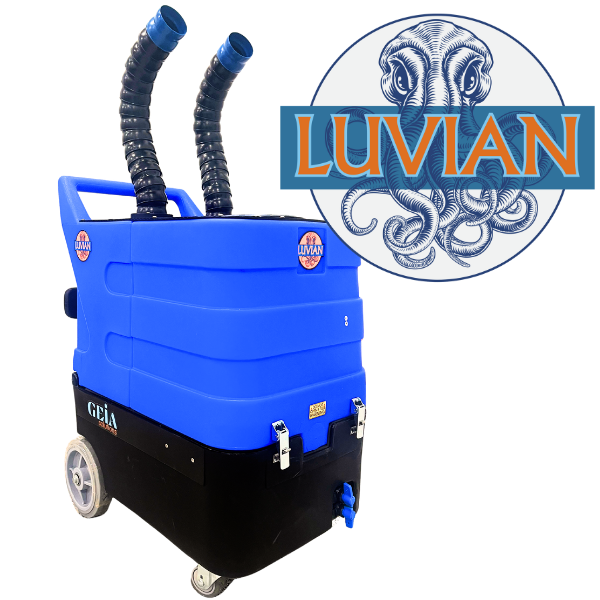
Portable for Exam Rooms. Programmed for the Ward.
What Changes When the Whole Environment Is Treated
"We run our normal cleaning, then carry the AYRUS through exam rooms and the kennel ward. It treats the air and the corners we could never get to by hand, and we don't have to move a single patient to do it. The isolation area finally stopped smelling like a kennel."
— Practice Manager, small-animal veterinary clinic (name on file)
How GEIA Fits Into Your Existing Clinic Protocol
Clean as You Always Do
Remove organic matter and run your standard cleaning and disinfecting protocol first, unchanged. Effective environmental control starts with removing soil — dry misting is the layer that follows.
Run GEIA
Carry the portable AYRUS room to room, or let a set-in-place ROGE run intermittent fog cycles in a fixed ward. The mist fills the space and reaches the air, cages, and corners a cloth can't.
Back to Service Fast
The dry mist settles and evaporates with no residue and no standing water. Rooms return to service with minimal downtime — animals never had to leave.
Refill & Maintain
Drop in tablets or refill solution on schedule. Descaler every 6 months. Ongoing labor: minutes per unit per month, with coverage that stays consistent even on peak days.
Frequently Asked Questions
No — and we won't claim that. GEIA dry misting equipment is an application method, not a disinfectant, and it does not carry kill claims. What it does is help reduce the environmental load of the pathogens that cause parvo, kennel cough, and other clinical infections by dispersing hypochlorous to the air and surfaces manual cleaning can't reach. It is one layer in your broader infection-control program, used alongside cleaning, validated chemistry, vaccination, and veterinary care — never as a replacement for any of them.
Hypochlorous is the same molecule the immune systems of humans and animals produce to fight infection. Formulated properly, it is non-toxic, pH neutral, non-irritating, and residue-free, which is why treatments can often run while staff and animals stay in the room. As with any product, follow the directions and safety data sheet for the specific chemistry your clinic uses.
No. Effective environmental control of parvovirus and other pathogens depends on removing organic matter through proper cleaning first, then using validated chemistry consistently. GEIA is the added layer that follows — it helps address the air and the hard-to-reach areas after you clean, never the cleaning itself.
Unlike traditional wet fogging or spraying, dry misting does not saturate surfaces. The 1–3 micron particles leave no sticky residue and don't introduce excessive moisture that could damage sensitive veterinary equipment or flooring. Hypochlorous is also non-corrosive at the concentrations used, so it's compatible with daily use in clinical settings.
GEIA equipment disperses hypochlorous solutions. EPA registration sits with the chemistry, not the equipment. 3.3g and 6.5g Tablets are EPA-registered HOCl-producing tablets. GEIA equipment is also compatible with other HOCl tablets, ready-to-use HOCl, and HOCl generators many distributors supply. Your distributor will help match the right chemistry to your clinic.
Ready to Treat the Air in Every Room — Without Moving an Animal?
Get a custom quote for your clinic, or schedule a live demo — we'll mist an exam room while your team watches, animals and all.