Protect Your Barn. Protect Your Flock.
HOCl dry misting adds a biosecurity layer that reaches barn air, cages, conveyors, and dust your wash-down can't — between flocks and during production. With avian influenza and Salmonella pressure at unprecedented levels, an ultra-fine 1–3 micron mist treats air and surfaces safely while birds are present. It's an added layer alongside your clean-out, never a replacement for it.
GEIA Dry Misting in Poultry & Chicken Farms
Watch dry misting used as an environmental layer inside a farm biosecurity program.
High-Density Housing Creates Pressure a Pressure Washer Can't Fully Relieve.
Barns, eggs, and equipment are constantly exposed to bacteria like Salmonella enteritidis and E. coli. Dust, manure, and surfaces spread these pathogens, and recent avian influenza outbreaks have put unprecedented pressure on producers — making air disinfection, not just surface cleaning, central to keeping virus out of the barn. Inspectors verify that walls, ceilings, fans, cages, and egg conveyors are cleaned and disinfected; a positive environmental swab can trigger mandatory egg diversion and a full re-sanitation before you can repopulate.
The traditional toolkit comes with trade-offs: bleach corrodes and weakens in dirt; quats leave residues; phenolics and formaldehyde mean toxic fumes, ventilation, and downtime before birds can return. Most farms already fog or mist a disinfectant between flocks — the gap is a chemistry safe enough to keep treating barn air and surfaces while the flock is present, without harsh fumes or corrosion.
- Coverage that reaches barn air, cages, conveyors, fans, and dust — not just hosed surfaces
- A between-flock clean-out layer that also supports air quality during production
- A non-corrosive chemistry that won't damage cages, conveyors, and electronics over repeated use
- Something safe to run with birds present — no harsh fumes, no downtime before repopulating
Ultra-Fine Dry Mist for Air & Surfaces — No Wet Mess.
GEIA equipment disperses hypochlorous as a 1–3 micron dry mist that evaporates rapidly, treating barn air and surfaces without wetting birds, feathers, or equipment. Hypochlorous is the same substance your immune system makes to fight infection — non-toxic at use levels, non-corrosive to metals, and residue-free. It reaches the hard-to-reach areas of cages, conveyors, fans, and structure that a hose can't, and it settles the dust that carries pathogens through the barn. Used alongside your clean-out, it adds an air-and-surface layer between flocks and during production.
Safe Around Birds
The fine mist evaporates fast, so surfaces and feathers stay dry. No harsh fumes and no downtime — basic ventilation and standard monitoring are all that's recommended while birds are present.
Air, Dust & Surfaces Together
One cycle treats barn air, reduces airborne dust, and settles on cages, conveyors, and structure — supporting the air-disinfection layer avian influenza pressure now demands.
Gentle on Equipment
Non-corrosive at use levels, even with daily use. Studies show no significant damage to electronics or metals after repeated treatment of cages, conveyors, and hatchery tools.
Sized for Long Barns, Cage Rows, and Egg Rooms
What Changes When Air and Surfaces Are Treated Together
"With bird flu in the news every week, we needed something we could run on the barn air without clearing the birds. The clean-out routine still happens between flocks — GEIA is the layer that keeps working in between. No fumes, no corrosion on the cage rows."
— Operations Manager, poultry operation (name on file)
How GEIA Fits Into Your Biosecurity Program
Clean Out First
Between flocks, your standard depopulation, dry-clean, wash, and disinfection runs first — dirt cannot be disinfected. HOCl misting works after organic matter is removed and is an added layer, never a replacement.
Run GEIA
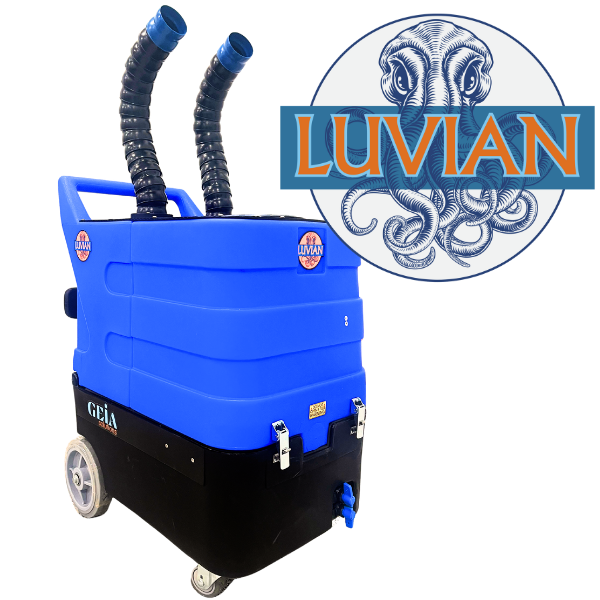
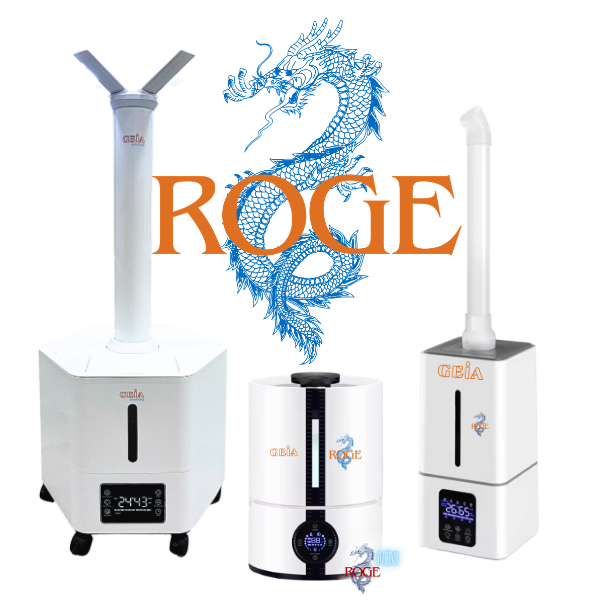
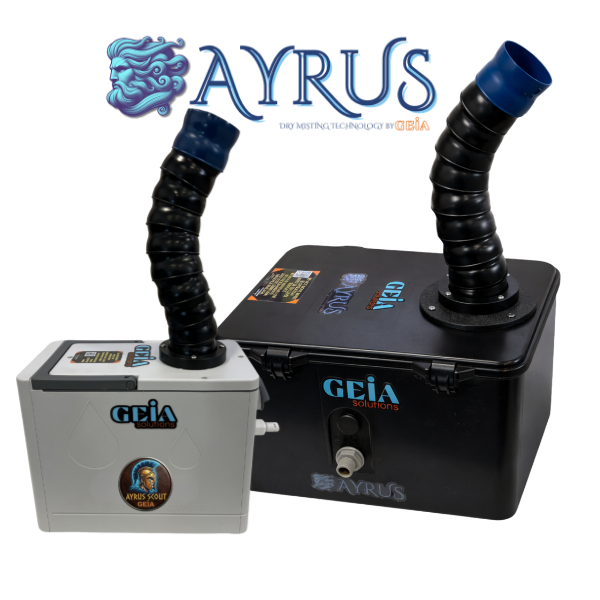
Mobile LUVIAN sweeps long barns and cage rows during clean-out. Set-in-place ROGE runs intermittent fog cycles during production. Portable AYRUS handles entryways and equipment rooms — treating air, dust, and surfaces.
Birds Stay Put
During production the mist evaporates fast and leaves no wet mess, so feathers and surfaces stay dry. Basic ventilation and standard monitoring are recommended — no harsh fumes, no need to clear the flock.
Document & Maintain
Cycle logs attach to your biosecurity and inspection records. Tablets or solution refilled on schedule. Descaler every 6 months. Ongoing labor: minutes per unit per month.
Frequently Asked Questions
No. Pre-cleaning is essential — dirt and manure can inactivate disinfectants, and dirt cannot be disinfected. Your depopulation, dry-clean, wash, and disinfection routine runs first. GEIA dry misting is an added air-and-surface layer that works after organic matter is removed, never a replacement for cleaning.
GEIA equipment is an application method and makes no kill claims. Avian influenza, Salmonella, and E. coli are named here only as the disease pressure poultry operations face — not as a GEIA efficacy claim, and we cite no kill or log-reduction figures for the equipment. Hypochlorous chemistry helps reduce environmental pressure as an added layer; any disinfectant efficacy claim belongs to the EPA-registered chemistry, not the equipment.
The ultra-fine 1–3 micron mist evaporates rapidly, so surfaces and feathers stay dry, and hypochlorous produces no harsh fumes. Field and lab use of HOCl at low ppm with birds present has been described as safe and effective; basic ventilation and standard monitoring are recommended. Because there's no wet mess and no fumes, there's no repopulation downtime.
Hypochlorous is non-corrosive at use levels, unlike bleach. Studies show no significant damage to electronics or metals after repeated treatments, allowing liberal use on cages, conveyors, fans, and hatchery tools — without the residues quats leave or the fumes phenolics and formaldehyde require.
This page focuses on GEIA dry misting for barn air, surfaces, and equipment. Low-ppm HOCl is discussed in the industry as a tool for managing biofilms and pathogens in poultry drinking-water systems as well — a separate application from dry misting. Talk to your distributor about water-line dosing for your specific system; it's outside what the misting equipment itself does.
GEIA equipment disperses hypochlorous solutions and is itself not EPA-registered as a disinfectant. EPA registration sits with the chemistry. 3.3g and 6.5g Tablets are EPA-registered HOCl-producing tablets. GEIA equipment is also compatible with other EPA-registered HOCl tablets, ready-to-use HOCl, and HOCl generators many distributors supply. Confirm use concentrations and food-contact allowances with the chemistry registration your operation uses.
Protect Your Barn. Protect Your Flock.
Get a custom quote for your operation, or schedule a live demo — we'll mist a barn zone while you watch the air and surfaces get treated, birds in place.