Treat the Air and the Equipment Above the Line. Without Adding Another Rinse-Down.
HOCl dry misting fits between your wash-down and your next shift — reaching the conveyors, racks, ceiling structure, and air your sanitation crew can hit with a hose but never really treat. It works alongside your HACCP-validated sanitation SOP, never in place of it.
GEIA Dry Misting in Food Storage & Processing
See dry misting treat processing and packaging areas as an added environmental layer.
Your Sanitation Window Is Already Compressed. The Air Above the Line Was Never in the SOP.
Your crew's HACCP-validated wash-down is solid: scrape, foam, rinse, sanitize, verify. The process works on the surfaces you can reach with a hose. It does not work on the spaces a hose can't get to — the underside of overhead conveyors, the inside of equipment housings, the ceiling structure above ready-to-eat zones, the air that's about to be drawn into a packaging room when production restarts.
Meanwhile, the sanitation window keeps getting shorter. Environmental swab results come back. A pathogen positive in zone 3 means a wider zone of corrective action than anyone wants. And there's no easy way to add another layer of treatment without adding another rinse-down — which the line schedule won't tolerate.
- An environmental treatment that fits between wash-down and start-up — no extra rinse cycle
- Coverage that reaches conveyor undersides, equipment interiors, and air the crew can't hose
- Chemistry that doesn't leave a residue requiring food-contact rinse remediation
- A workflow the sanitation crew can run, that integrates into the SSOP without rewriting it
Dry Misting Reaches Where a Hose Cannot.
GEIA equipment disperses hypochlorous as a 1–3 micron mist that fills the full volume of a processing space — air, ceiling structure, equipment housings, conveyor undersides, the gaps between racks. Hypochlorous is the same molecule the human immune system produces. It carries a pH of about 6.5, leaves no residue, and breaks down to saline. The mist is ultra-fine — no standing water, no rinse-off requirement, no labor added to the sanitation window.
Treat Air & Equipment Together
A single cycle treats the air above the line and the equipment surfaces your crew couldn't reach with a hose.
No Rinse-Down Required
The mist evaporates with no residue. No corrective rinse cycle. No additional water in the wastewater stream. No SOP rewrite.
Fits Inside the Sanitation Window
Cycles fit between wash-down and production start-up — sized to room volume, measured in minutes, not hours.
Built for Between-Shift Windows and High-Volume Spaces
What Changes When the Whole Environment Is Treated
"GEIA dropped right into our between-shift window. Sanitation crew runs their SSOP, then the AYRUS runs its cycle while they're documenting. No rewrite, no extra hose work, no additional headcount."
— Plant Sanitation Manager, processing facility (name on file)
How GEIA Fits Inside Your Existing Sanitation Window
Sanitation Crew Runs SSOP
Scrape, foam, rinse, sanitize, verify — your existing HACCP-validated wash-down runs first, unchanged.
Run GEIA
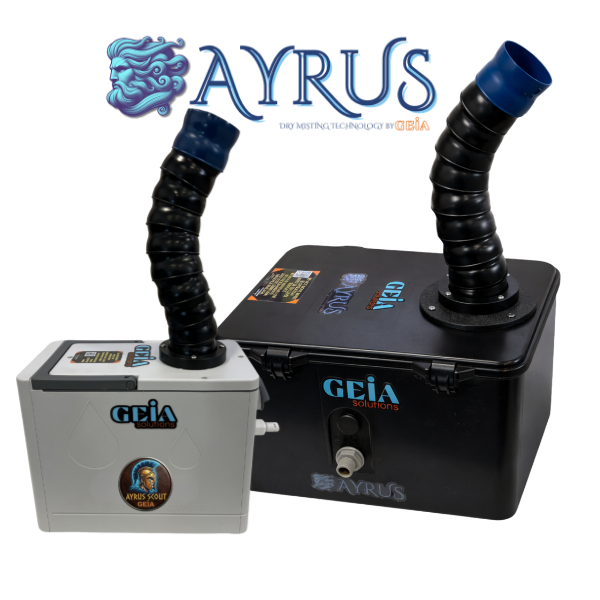
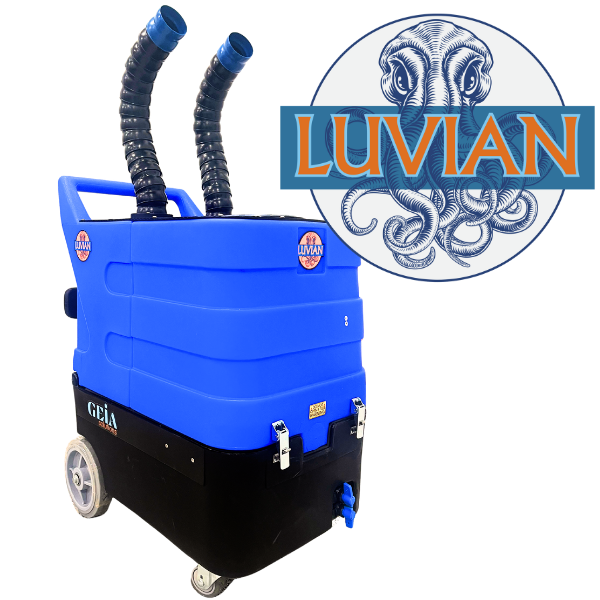
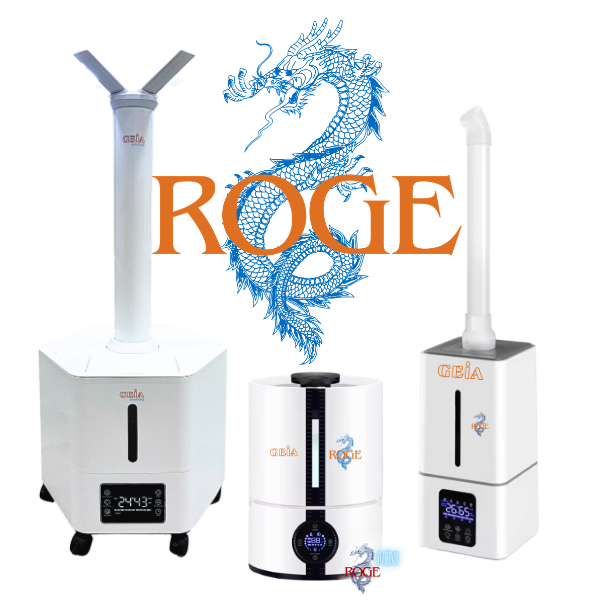
Portable AYRUS treats zones carried zone to zone. Set-in-place ROGE runs fixed zones on a set routine between shifts; mobile LUVIAN handles large halls and transport trailers — covering the air and equipment surfaces a hose can't.
Production Restarts
Dry mist evaporates with no residue. No standing water. No additional rinse. Line restarts on schedule with the whole environment treated, not just the wetted surfaces.
Document & Maintain
Cycle logs attach to your sanitation records. Tablets refilled on schedule. Descaler every 6 months. Ongoing labor: minutes per unit per month.
Frequently Asked Questions
No. GEIA works alongside your existing sanitation SOP — never in place of it. Your wash-down runs first. GEIA then treats the air and the equipment surfaces your crew couldn't reach with a hose. The two together treat both wetted surfaces and the full environment.
Hypochlorous chemistry has a long history of food-industry use. EPA registration sits with the chemistry, not the equipment. The specific food-contact-surface allowances depend on the chemistry registration your facility uses (3.3g Tablets, 6.5g Tablets, ready-to-use HOCl, or generator output). Your distributor and chemistry SDS will confirm food-contact compatibility for your application.
The mist is ultra-fine — 1–3 micron particles that evaporate without leaving standing water. There is no residue requiring corrective rinse. Cycles fit inside the existing sanitation window without adding wastewater, hose labor, or downtime.
GEIA treats the same environment your environmental swab program samples. Facilities integrating GEIA into between-shift sanitation report it as a complement to their existing swab-driven corrective action workflow. Your QA team can continue to operate the swab program as defined; GEIA cycle logs attach as supporting environmental treatment documentation.
The portable AYRUS unit is built for fast deployment in confined spaces — trailer interiors, dock seal areas, smaller equipment rooms. Carried unit to unit, a full trailer interior cycle completes in minutes between loads. See the AYRUS product page for portable-specific specs.
GEIA equipment disperses hypochlorous solutions. EPA registration sits with the chemistry. 3.3g and 6.5g Tablets are EPA-registered HOCl-producing tablets. GEIA equipment is also compatible with other EPA-registered HOCl tablets, ready-to-use HOCl, and HOCl generators many distributors supply. Your distributor will confirm the chemistry your facility uses meets your jurisdiction's food-safety requirements.
Ready to Treat the Air and the Equipment Above the Line?
Get a custom quote for your facility, or schedule a live demo — we'll mist a processing zone while your QA and sanitation leads watch.