Treat the Air Across an Entire Housing Pod. On a Set Routine. With Nothing Inside the Unit an Inmate Could Misuse.
In dense housing units, intake areas, and shared dayrooms, airborne illness travels fast and odors never let up. HOCl dry misting adds a layer of air and surface treatment your custodial crew can't reach by hand — dispersed by set-in-place, tamper-resistant equipment that runs on a programmed cycle. It works alongside your standard cleaning protocol, never in place of it.
GEIA Dry Misting in Correctional Facilities
See staff, medical, booking, and visitation areas treated under supervision.
A Cell Block Is a Closed Box of Shared Air. Wiping Surfaces Was Never Going to Be Enough.
Your custodial routine is disciplined: floors, fixtures, common surfaces, the bathrooms inmates share. It works on the surfaces a crew can reach. It does not reach the air a whole pod breathes together, the ventilation paths between cells, the upper structure of a two-tier block, or the booking and intake area where a steady stream of new arrivals brings whatever they came in with.
When a respiratory illness moves through a dense housing unit, it moves through the air — and a closed, occupied building gives it every advantage. Add the constant odor load of a facility that never empties, and the staff and the population both pay for an environment no wipe-down can fully treat. The hard part: any new product has to be something inmates can never access, divert, or weaponize.
- An air and surface treatment that runs on a set routine with no harsh chemicals an inmate could misuse
- Coverage that treats the whole pod's shared air — not just the surfaces a crew can wipe
- Set-in-place, tamper-resistant equipment that runs unattended in fixed locations
- Odor control that holds up in a building that's occupied around the clock
- A workflow that layers onto existing custodial SOPs without rewriting them or adding headcount
Dry Misting Treats the Air a Whole Pod Shares — Hands-Off and On a Timer.
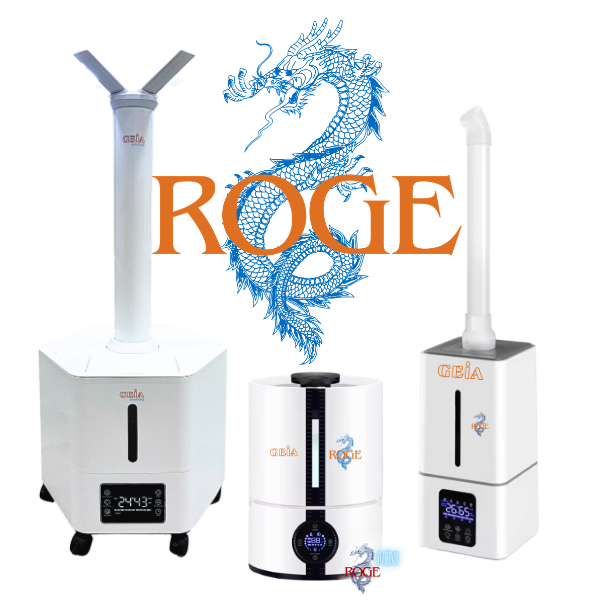
GEIA equipment disperses hypochlorous as a 1–3 micron dry mist that fills the full volume of a housing unit — the shared air, the upper tiers, the ventilation paths, the surfaces a crew can't reach. Hypochlorous is the same molecule the human immune system produces. It carries a pH of about 6.5, leaves no residue, and breaks down to saline. Set-in-place ROGE units run intermittent fog cycles with auto shut-off, placed out of reach so there is nothing for an inmate to access, divert, or misuse.
Tamper-Resistant by Design
Set-in-place units sit out of reach and run unattended on a programmed schedule. No loose chemicals on a cart, nothing an inmate could access or weaponize.
Treats the Whole Pod's Air
A single cycle fills the shared volume of a housing unit — upper tiers, ventilation paths, and surfaces — not just the spots a crew can wipe by hand.
Runs on a Set Routine, Hands-Off
Programmed intermittent cycles with auto shut-off run during lockdown or off-hours. Custodial crew runs cleaning first; the unit runs itself after.
Built for Fixed Pods, Tamper Resistance, and Unattended Cycles
What Changes When the Whole Housing Unit Is Treated
"The set-in-place units run their cycle during lockdown — out of reach, nothing on a cart for anyone to grab. Custodial does their routine, the unit handles the air across the whole pod. The odor difference in the blocks was the first thing the officers noticed."
— Facilities Manager, county facility (name on file)
How GEIA Layers Onto Your Existing Custodial Routine
Custodial Crew Cleans First
Your standard cleaning routine runs as it always has — floors, fixtures, shared bathrooms, common surfaces. GEIA never replaces it.
Set-in-Place Units Run on Schedule
ROGE units placed out of reach run intermittent fog cycles with auto shut-off — treating the shared air of each pod during lockdown or off-hours, hands-off.
Mobile Sweeps for Large & Transient Areas
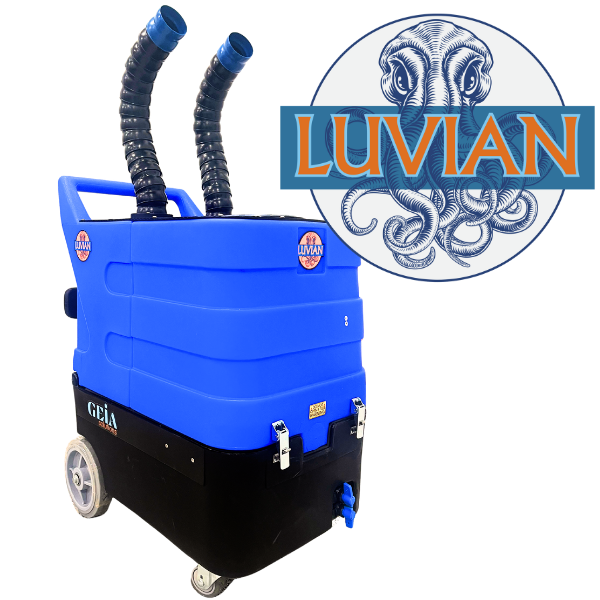
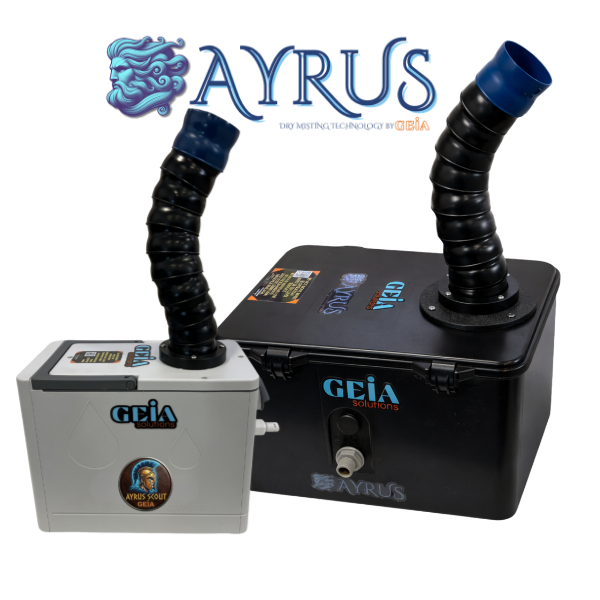
The big mobile LUVIAN rolls through intake halls, gyms, and kitchens; the portable AYRUS handles offices, medical, and booking under supervision.
Document & Maintain
Cycle logs attach to your sanitation records. Tablets refilled on schedule. Descaler every 6 months. Ongoing labor: minutes per unit per month.
Frequently Asked Questions
No. Set-in-place ROGE units are placed out of reach and run their intermittent fog cycle unattended once started — there is no loose chemical on a cart, nothing for an inmate to grab. The hypochlorous itself is non-toxic, pH neutral, and the same molecule the human immune system produces; it is not a hazardous concentrate. Mobile and portable units are operated by staff under supervision, then secured.
No. GEIA works alongside your existing cleaning routine — never in place of it. Your crew cleans first. GEIA then treats the shared air and the surfaces a crew couldn't reach by hand. The two together treat both wiped surfaces and the full environment of a housing unit.
Hypochlorous is non-toxic, pH neutral, and naturally produced by the human immune system. The 1–3 micron dry mist can be used in occupied spaces — there is no need to clear a pod. Cycles are typically run during lockdown or off-hours for operational reasons, but the chemistry itself is safe around staff and population.
GEIA equipment is an application method, not a disinfectant with kill claims, and it is not itself EPA-registered. It helps reduce and manage airborne and surface contamination across the shared air of a pod as an added layer alongside your cleaning protocol. EPA-registered efficacy sits with the chemistry — see 3.3g and 6.5g Tablets. We never claim the equipment kills or eliminates any specific pathogen.
Hypochlorous treats odors at the source rather than masking them, and dry misting reaches the full volume of a space — including the upper tiers and ventilation paths a deodorizer spray can't. Facilities report the odor difference in housing blocks as one of the first things staff notice.
GEIA equipment disperses hypochlorous solutions. EPA registration sits with the chemistry, never the equipment. 3.3g and 6.5g Tablets are EPA-registered HOCl-producing tablets. GEIA equipment is also compatible with other EPA-registered HOCl tablets, ready-to-use HOCl, and HOCl generators many distributors supply. Your distributor will confirm the chemistry your facility uses meets your jurisdiction's requirements.
Ready to Treat the Air Across Your Housing Units — Safely and Hands-Off?
Get a custom quote for your facility, or schedule a live demo — we'll mist a space while your administration and custodial leads stay in the room and watch it work.