Warm, Humid, and Full of Crop Pathogen Pressure. Treat the Air, Not Just the Benches.
Powdery mildew, mold, and crop pathogens thrive in exactly the warm, humid conditions that grow your plants. HOCl dry misting treats greenhouse and storage air, trays, benches, vents, and walls your manual cleaning can't fully reach — residue-free, safe around plants and workers. An added layer alongside your sanitation routine, never a replacement for it.
GEIA Dry Misting in Greenhouses & Agriculture
Watch dry misting treat clone rooms and work areas — around the plants, not on the crop.
The Conditions That Grow Your Crop Also Grow the Pathogens Threatening It.
An indoor grow environment runs warm and humid by design — and that's exactly what powdery mildew, fungal pathogens, and bacteria need to spread. They move through the air, settle on trays, pots, benches, and vents, and ride the airflow from one bay to the next. Wiping down surfaces helps, but it doesn't treat the air, and it can't keep pace with the spore pressure a humid house generates between cleanings.
Post-harvest, the problem follows the crop into storage. Bacterial soft rot, fusarium dry rot, and fungal infections like anthracnose and crown rot drive spoilage and shrink in bins, on conveyor belts, and in transport. Traditional chemical washes can leave residues, require rinsing, and pose safety risks near edible crops. Growers want a treatment that handles air and surfaces together — from propagation through storage — without residue and without clearing people or plants out of the space.
- Air-and-surface coverage for propagation areas, grow rooms, and post-harvest storage
- A residue-free chemistry safe to use around plants and workers, with no rinsing
- Help managing the powdery mildew, mold, and pathogen pressure a humid house generates
- A workflow that runs while people and plants stay in the space — no shutdown
One Fine Mist That Deodorizes While It Treats Air and Surfaces.
GEIA equipment disperses hypochlorous as a 1–3 micron mist that fills a grow room or storage space — treating air, then settling residue-free onto trays, pots, tools, benches, vents, and walls. Hypochlorous is a natural antimicrobial the human immune system makes, produced for facility use through simple tablet activation in water. It's non-corrosive, non-flammable, biodegradable, leaves no toxic residue, and is approved for use in organic crop production. It deodorizes while it treats — removing VOCs and airborne organisms without soaking surfaces or wetting product.
Safe Around Plants & Workers
Non-toxic and residue-free, hypochlorous can be applied safely while people and plants are present — making it a practical layer for occupied propagation areas and grow rooms.
Targets Mildew & Mold Pressure
Treating air and surfaces together helps manage the powdery mildew, fungal, and bacterial pressure a warm, humid house generates — reaching the vents and corners airflow carries spores into.
Protects Post-Harvest Storage
In storage, the dry mist treats bins, conveyor belts, and ventilation without soaking surfaces — helping suppress the bacterial and fungal growth that drives spoilage and shrink.
Sized for Grow Bays, Propagation Rooms, and Storage
What Changes When the Air and the Benches Are Treated Together
"Humidity is the whole job here, and it's also what feeds the mildew. Running the mist on the air and benches gave us a layer that keeps working between cleanings — and it carried straight through to our storage bins. No rinsing, no residue, nobody has to leave the house."
— Cultivation Manager, greenhouse operation (name on file)
How GEIA Fits Into Your Sanitation SOP
Run Your Cleaning Routine
Your standard surface cleaning and sanitation of trays, benches, and tools runs first. HOCl dry misting is an added air-and-surface layer that works alongside it, never a replacement for it.
Run GEIA
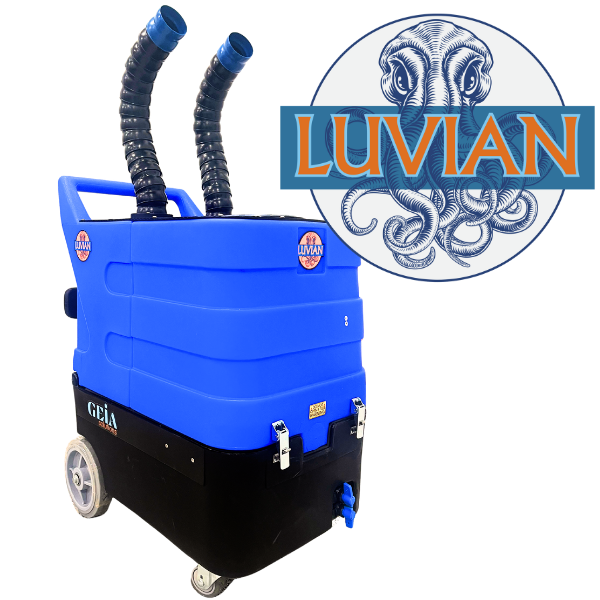
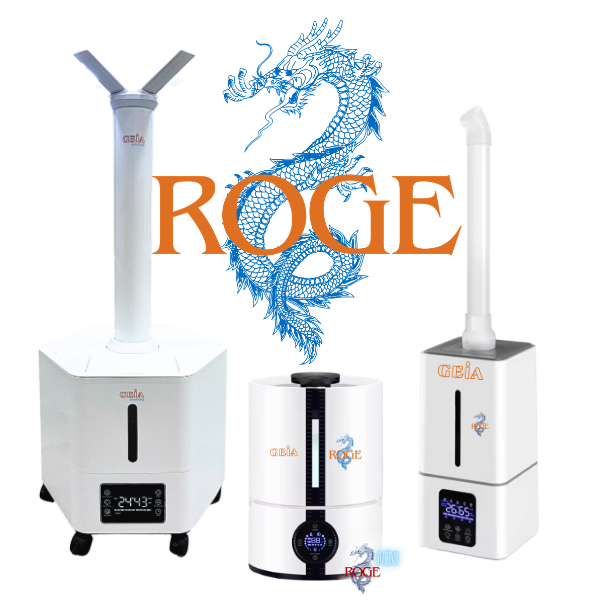
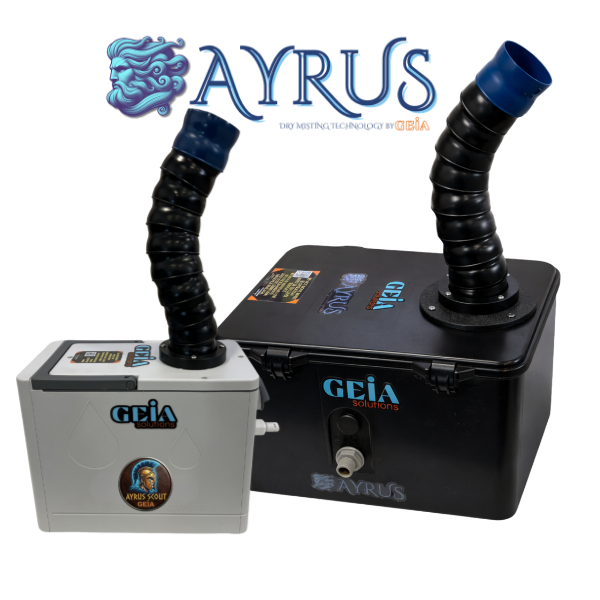
Mobile LUVIAN sweeps large grow bays and storage rooms. Set-in-place ROGE runs intermittent fog cycles in propagation and storage to keep ahead of humidity. Portable AYRUS handles clone rooms and corners.
Plants and People Stay Put
The fine mist treats air and settles residue-free, then breaks down to saline. No rinsing, no soaking, no need to clear the house — cycles run while propagation and work continue.
Maintain on a Simple Schedule
Refill tablets or solution on schedule; rotate batches first-in, first-out. Descaler every 6 months. Direct foliar and produce-rinse HOCl applications are available separately. Ongoing labor: minutes per unit per month.
Frequently Asked Questions
No. GEIA dry misting is an added layer that treats the air and the surfaces — vents, benches, corners, storage bins — your manual cleaning can't fully reach. Your surface cleaning and sanitation runs first; GEIA adds the air-and-surface layer on top, never in place of it.
GEIA equipment is an application method and makes no kill claims. Powdery mildew, mold, and crop pathogens are named here only as the pressure a warm, humid house generates — not as a GEIA efficacy claim. Hypochlorous chemistry helps manage that environmental pressure as an added layer; any disinfectant efficacy claim belongs to the EPA-registered chemistry, not the equipment.
Yes. Hypochlorous is non-toxic, non-corrosive, non-flammable, biodegradable, and leaves no toxic residue. Its ability to be safely applied while people and plants are present makes it practical for occupied propagation areas and grow rooms. It is also approved for use in organic crop production — verify with your specific certifier.
No. The 1–3 micron dry mist treats air and settles onto surfaces without soaking them, then breaks down to a simple saline solution — no rinsing required and no residue left behind, unlike chlorine-based washes. It also deodorizes as it works, removing VOCs and airborne organisms.
Yes. The same dry misting treats storage bins, conveyor belts, and ventilation without soaking surfaces — helping suppress the bacterial and fungal growth that drives soft rot, dry rot, and spoilage in crops like potatoes and bananas. Treating storage and transport surfaces helps protect quality from harvest through the supply chain.
GEIA equipment disperses hypochlorous solutions and is itself not EPA-registered as a disinfectant. EPA registration sits with the chemistry. 3.3g and 6.5g Tablets are EPA-registered HOCl-producing tablets. GEIA equipment is also compatible with other EPA-registered HOCl tablets, ready-to-use HOCl, and HOCl generators many distributors supply. Direct foliar and produce-rinse applications are separate from dry misting — confirm crop-contact use and concentrations with your chemistry's registration and your certifier.
Protect Your Crop from Propagation Through Storage.
Get a custom quote for your operation, or schedule a live demo — we'll mist a grow bay or storage room while your team and your plants stay right where they are.